






Article: Duvet, Comforter, Quilt or Blanket: What Is the Difference?
Duvet, Comforter, Quilt or Blanket: What Is the Difference?
A duvet is the warm filling that goes inside a cover. A comforter is a filled bed covering you use as it is, with no cover. A quilt is a flat, stitched layer, thinner than both. A blanket is a single piece of cloth, with no filling at all. In Pakistan the four words are used for the same thing, which is why shopping for one is confusing.
Here is how to tell them apart, and which one to buy for which night.
Duvet: a filling that lives inside a cover
A duvet has two parts. The duvet filler (also called a duvet insert) is the soft, filled layer. The duvet cover is the washable case it sits inside, like a pillowcase for your bed.
This is the part most people miss. You wash the cover often and the filler rarely. When you want a new look, you change the cover, not the whole bedding. When the weather turns, you change the filler.
Our fillers come in three weights, all made in-house:
- The Summer Season Duvet Filler is a light microfiber, for warm months.
- The All Season Duvet Filler has a 300 GSM microfiber fill, for most of the year.
- The Winter Season Duvet Filler has an 800 GSM microfiber fill, for the coldest nights.
GSM means grams per square metre. A bigger number means more fill and more warmth.
Comforter: a duvet that skips the cover
A comforter is a filled layer, usually stitched through, that you use on its own. It is the simplest option: one piece, nothing to put on. The trade-off is washing. A whole comforter is bulky to wash and slow to dry, where a cover goes in an ordinary machine load.
We make duvets, not comforters, because the cover-and-filler pair is easier to keep clean and easier to change with the season.
Quilt: thin, flat and stitched
A quilt is two layers of cloth with a thin filling between, held in place by lines of stitching. It is flatter and lighter than a duvet. People use a quilt as a summer cover, as a layer on top of a sheet, or folded at the foot of the bed.
It is the right choice when a duvet is too much and a sheet is too little.
Blanket: one layer of cloth
A blanket has no filling. It is a single piece of woven or knitted cloth, such as plush or chenille. It warms by being thick and soft, not by trapping air in a filling.
A blanket works best as an extra layer: over your duvet on the coldest week, or on the sofa. See the winter blanket guide for how to choose one.
Which one should you buy?
- You want one bed you can change with the seasons: a duvet. Buy two fillers (a light one and a winter one) and a few covers.
- You want something easy for a guest room: a duvet in the all-season weight.
- You sleep warm: the summer filler, or a quilt over a sheet.
- You are always cold: the winter filler, with a blanket folded at the foot.
Size matters more than you think
A duvet looks right when the filler fits the cover. Our fillers are made to match our duvet covers: the Queen filler is 90 × 90 inches and the King is 106 × 90 inches. Check your bed size, then check the size on the cover you plan to use. A filler that is too small slides into the corners of its cover and leaves cold gaps.
How to look after a duvet
Put the filler in a cover and wash the cover on its own schedule. The fillers are machine washable. Our fillers say to wash cold on a gentle cycle and tumble dry on low. Dry the filler fully before you put it away, and shake it out so the fill spreads evenly.
Start with the cover
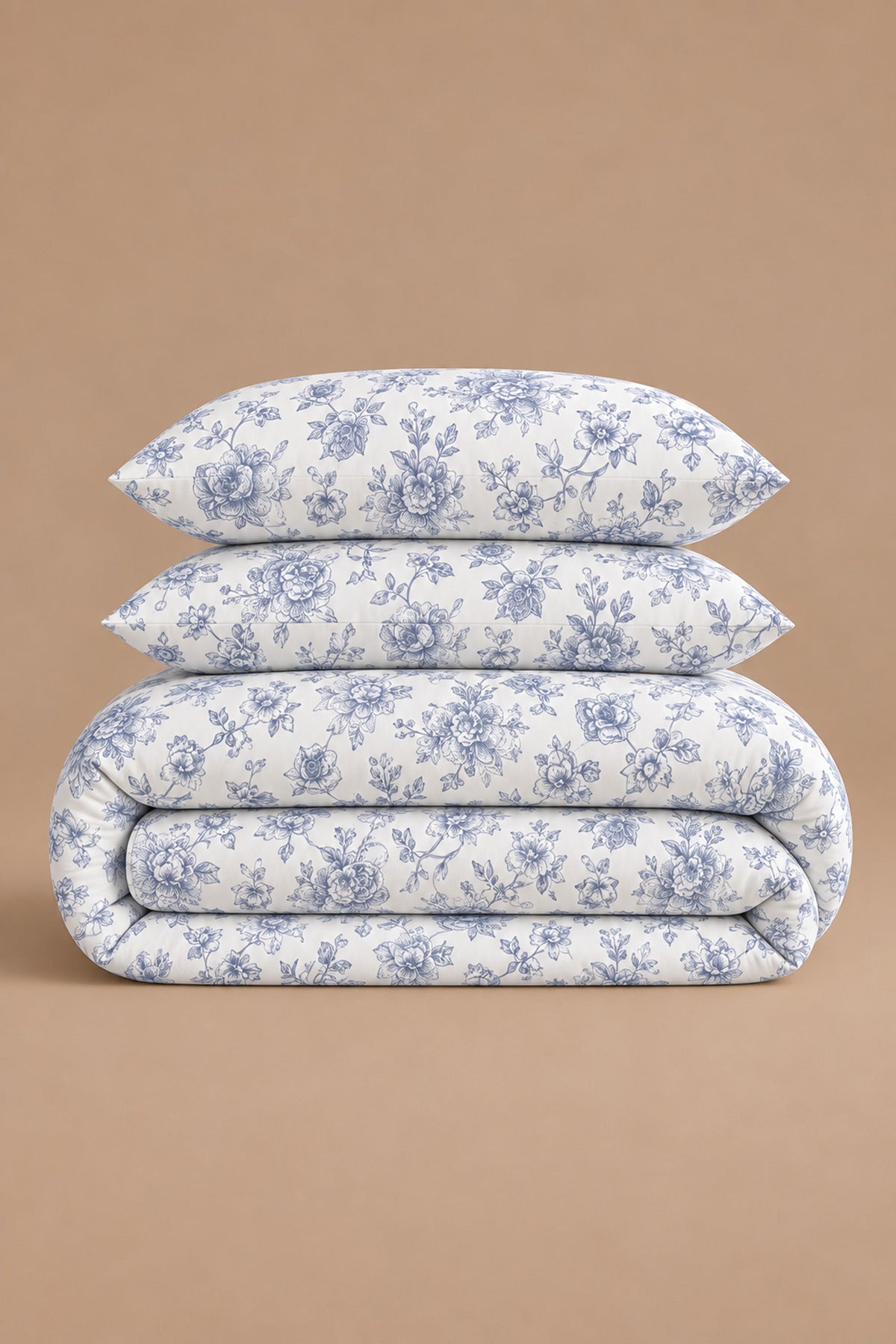
If you already own a filler, the quickest change to your bed is a new cover. Our duvet cover sets come with matching pillowcases, in percale and sateen. Choose by weave: percale feels crisp and cool, sateen feels smooth and soft. A good place to begin is the Toile Heaven Percale Duvet Cover Set.
If you need the filling too, browse all the duvet fillers and pick the weight that fits your nights.
From Nishat. Since 1990.